Why Winter Grooming Is Just as Important for Your Pet as Summer Grooming
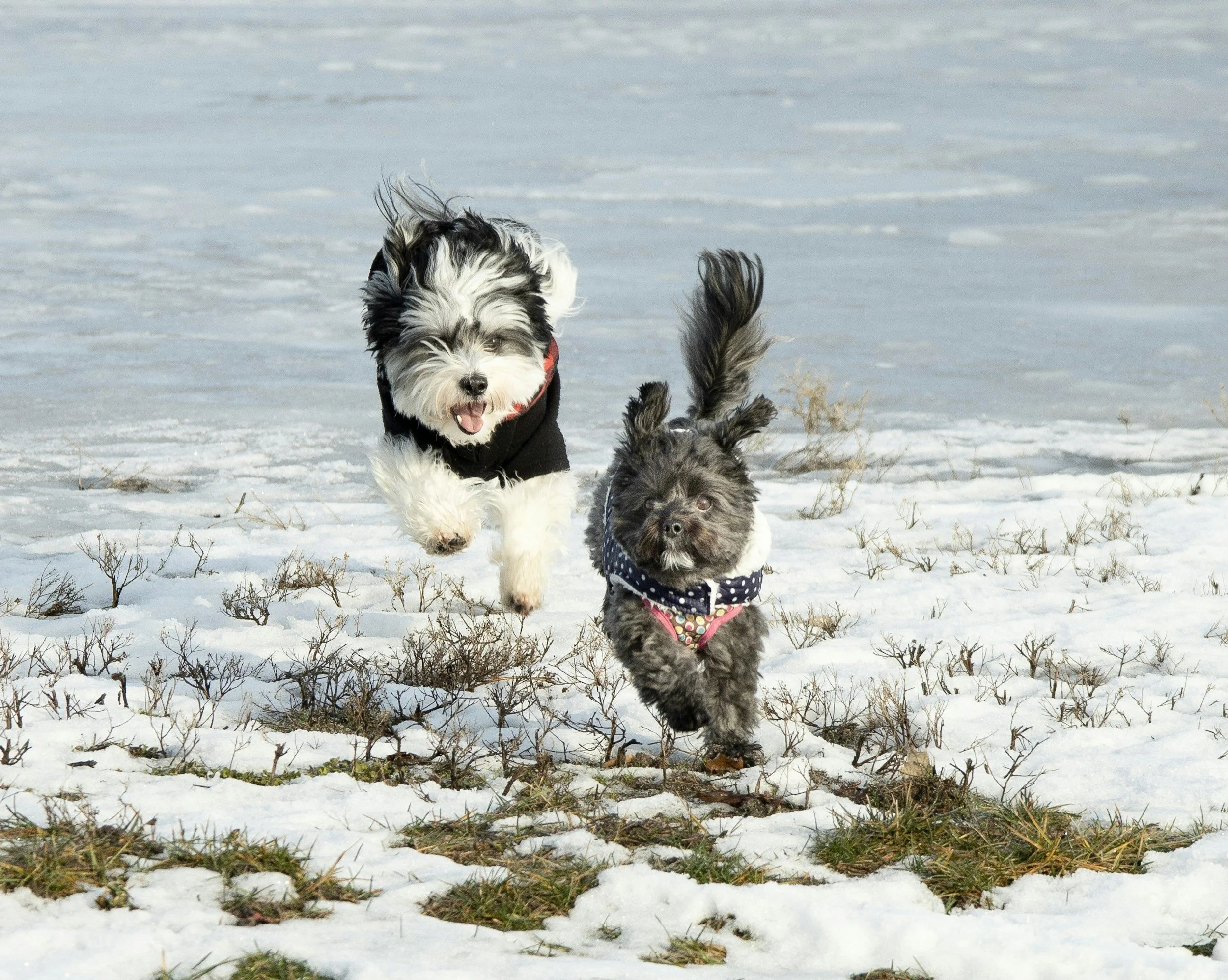
When temperatures drop, it’s common to assume grooming can slow down until spring. After all, our pets aren’t swimming, rolling in mud as often, or dealing with intense summer heat.
However, hair and nails never stop growing, regardless of the season. Winter—especially here in Southeast Texas—creates a unique set of grooming challenges that directly affect your pet’s comfort, mobility, and long-term health.
Nails Don’t Take a Winter Break
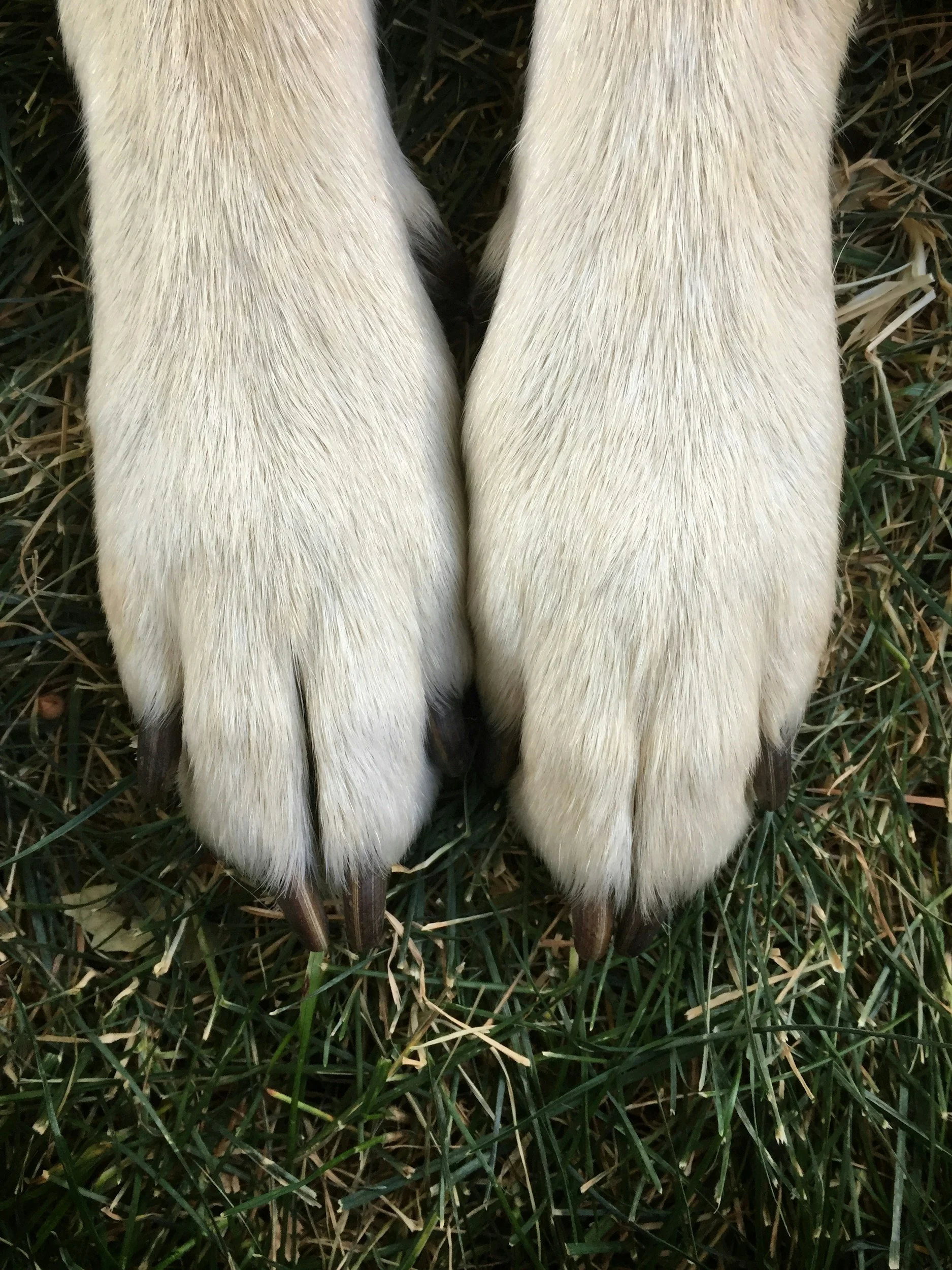
One of the most critical reasons to maintain winter grooming is nail care.
As nails grow too long, they alter the way the foot meets the ground. This can lead to pronation, where the foot shifts or rolls unnaturally during movement. Over time, pronation places increased strain on the joints, knuckles, and tendons, which can accelerate:
Arthritis development
Joint and knuckle damage
Long-term mobility issues
Routine nail trimming and filing help maintain proper alignment, support healthy movement, and protect joint health over your dog’s lifetime.
Sanitary Areas and Paw Pads Still Require Maintenance
Even in cooler months, grooming basics remain essential.
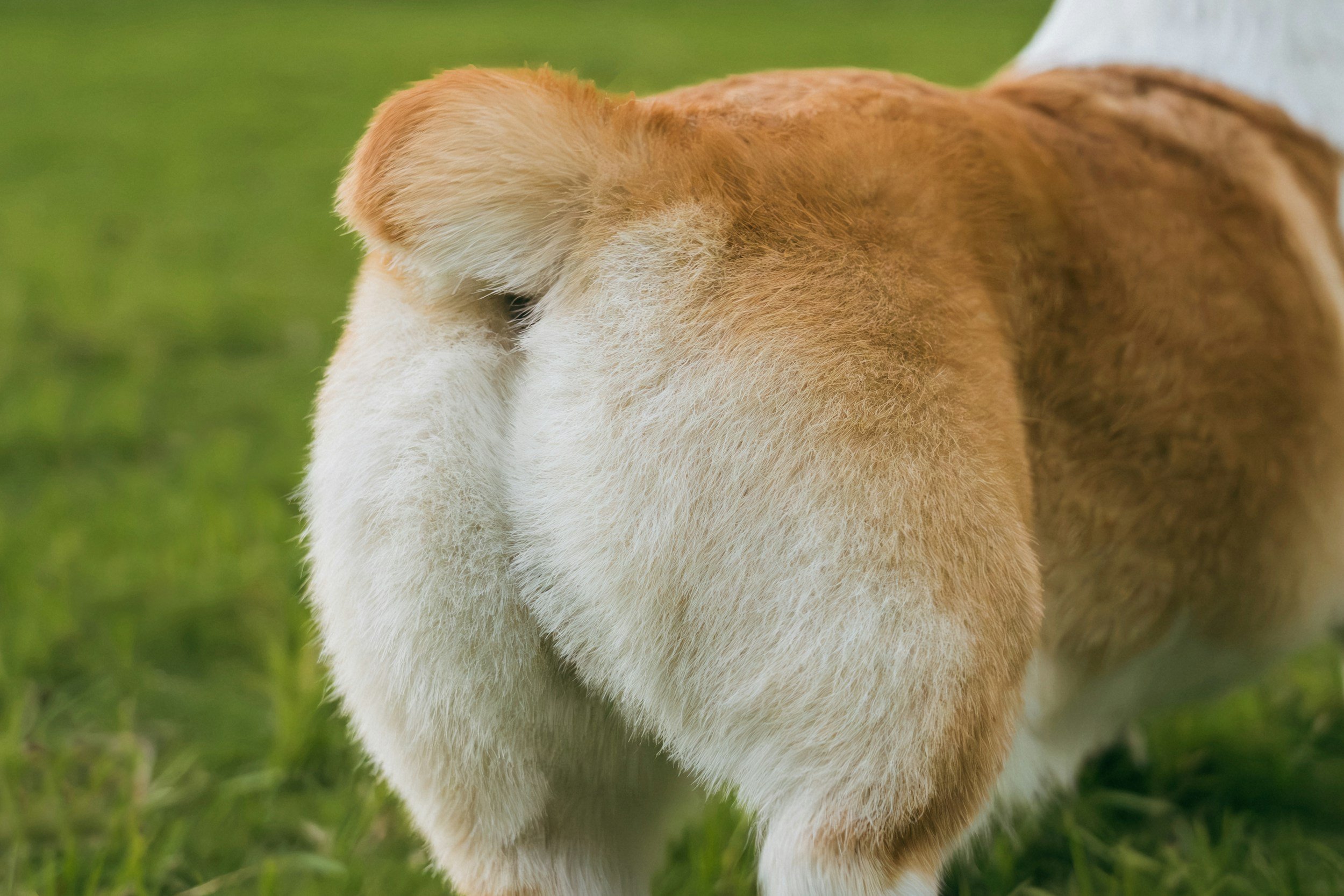
Regular trimming of:
Sanitary areas
Hair between paw pads
helps prevent debris buildup, moisture retention, irritation, and slipping.
These small maintenance details play a significant role in overall comfort and hygiene throughout winter.

The Impact of Long Gaps Between Grooming Appointments
Another often-overlooked factor is how extended breaks affect a dog’s experience during grooming.
Dogs accustomed to regular grooming develop familiarity and predictability—often referred to as grooming table manners. These are built through consistent, rhythmic grooming cycles.
When there is a prolonged winter gap:
Stress and anxiety often increase
Dogs may resist handling more strongly
Grooming appointments become longer and more challenging
Maintaining consistency throughout the year helps reduce stress for both the dog and the grooming professional.
Double-Coated Breeds Still Need Coat Movement
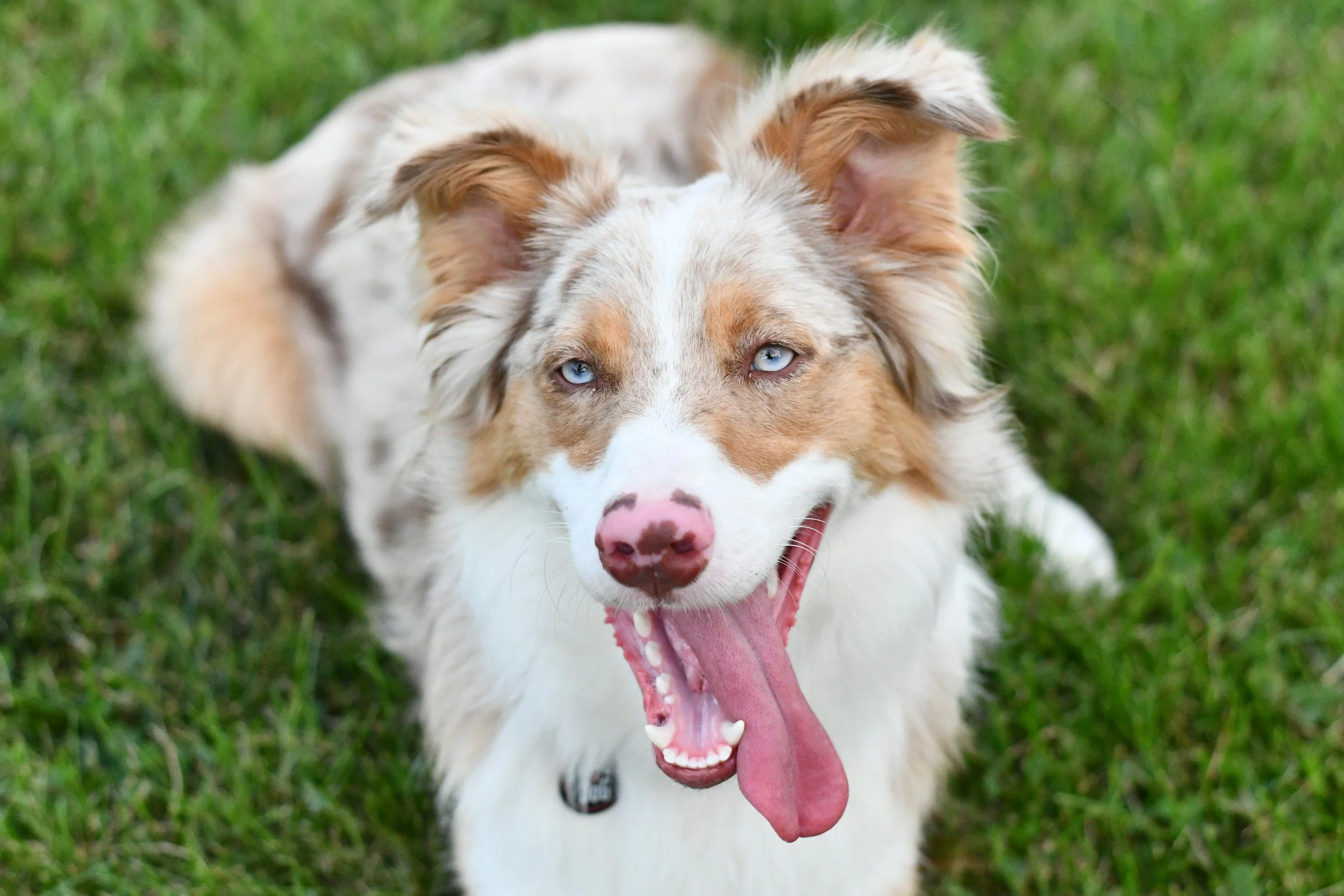
For double-coated breeds, winter grooming is not about removing the coat—it’s about maintaining healthy coat function.
The undercoat continues to shed and regenerate throughout the season. When loose coat isn’t regularly brushed or blown out, it can become impacted, especially when combined with dirt, debris, rolling, and everyday outdoor activity.
The Texas Climate Factor
In Southeast Texas, weather patterns are anything but consistent. It’s not unusual to experience winter solstice followed by 80-degree temperatures days later.
This creates confusion for the coat:
Shorter days and cooler nights signal the body to insulate
Sudden warmth signals the coat to release
This constant fluctuation significantly increases the risk of impacted coats and matting unless grooming remains consistent.
Winter Haircuts for Longer-Coated Dogs
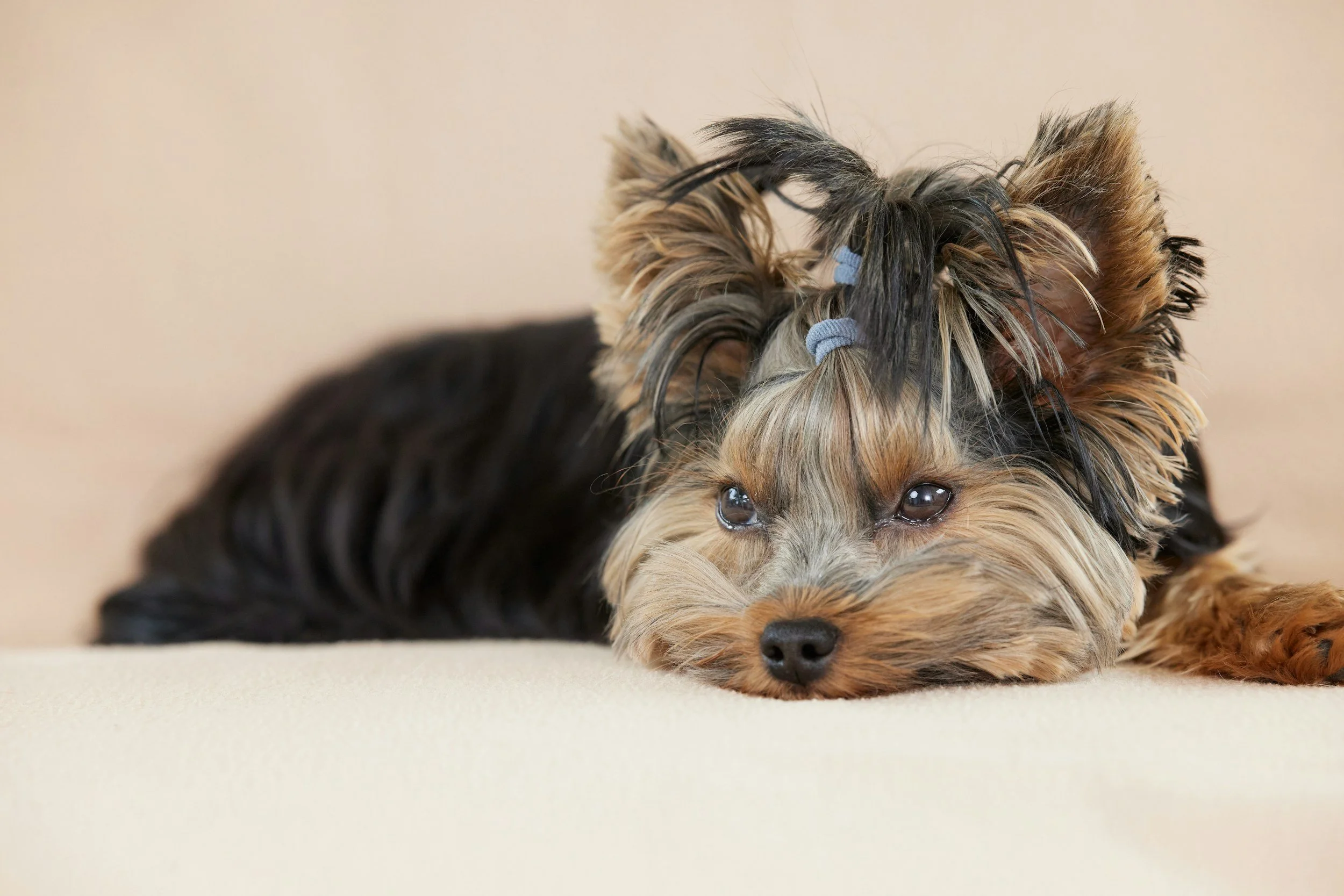
Dogs with longer hair that don’t fall into the short-haired or double-coated category still benefit from regular winter grooming.
While these dogs may not need to be as short as they are in summer, groomers can use:
Longer blades
Guide combs
to create a softer, fluffier winter length.
However, these options are only available when the coat is properly brushed, combed, and free of matting.
When grooming becomes inconsistent over winter, matting limits haircut choices and often necessitates shorter trims than desired—even in cold weather.
Working with your groomer to balance:
Hair length
At-home maintenance
Grooming frequency
helps maintain coat health through winter and prevents larger issues when warmer weather returns.
A Quick Note on Sweaters and Longer Coats
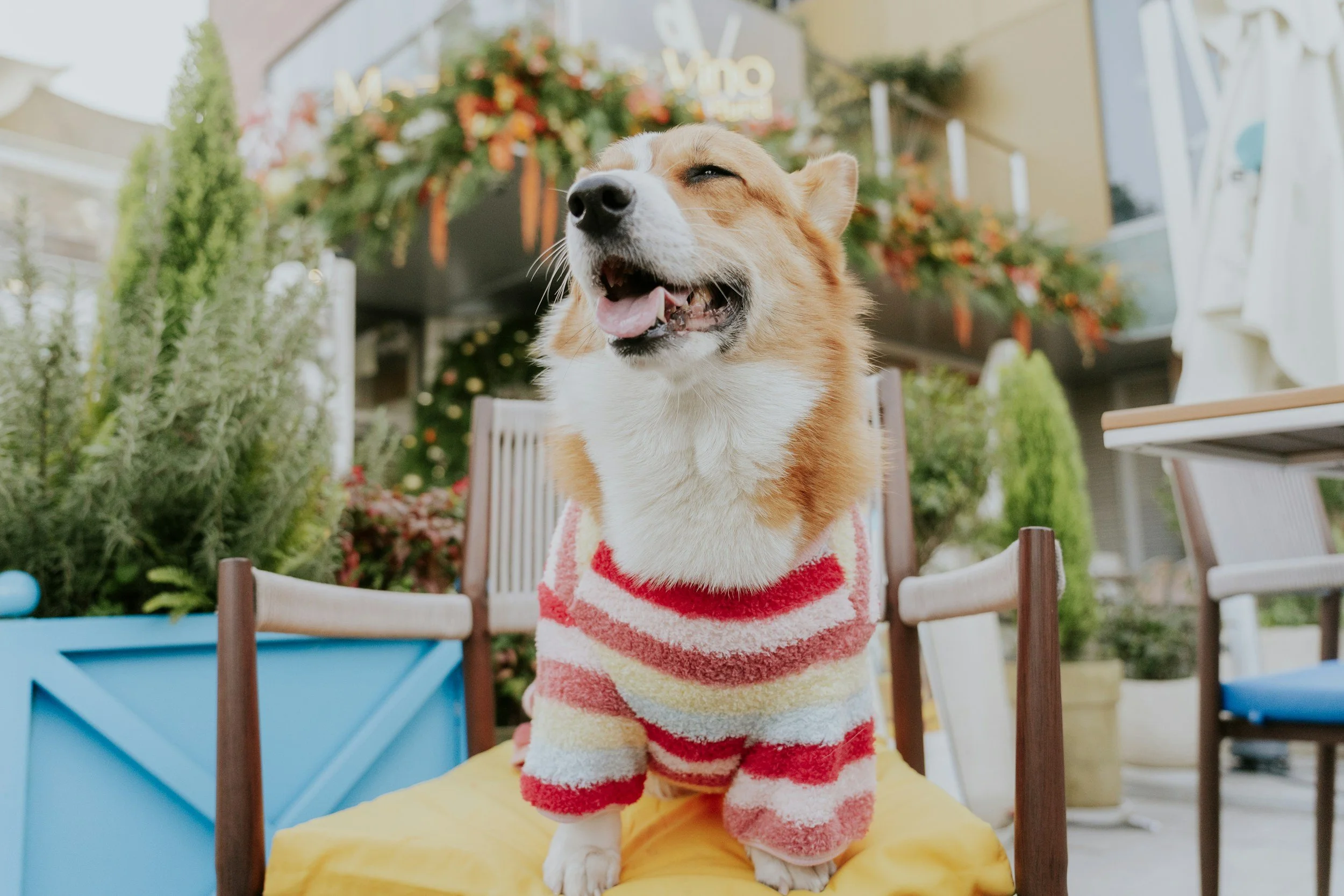
For longer-coated dogs, winter apparel requires careful consideration.
Sweaters and jackets create friction against long hair, which can quickly cause:
Matting
Coat breakage
Skin irritation
In severe cases, this results in a very short shave during cold weather. A well-maintained winter coat provides more flexibility for clothing without compromising coat or skin health.
Consistency Through Winter Supports Long-Term Coat Health
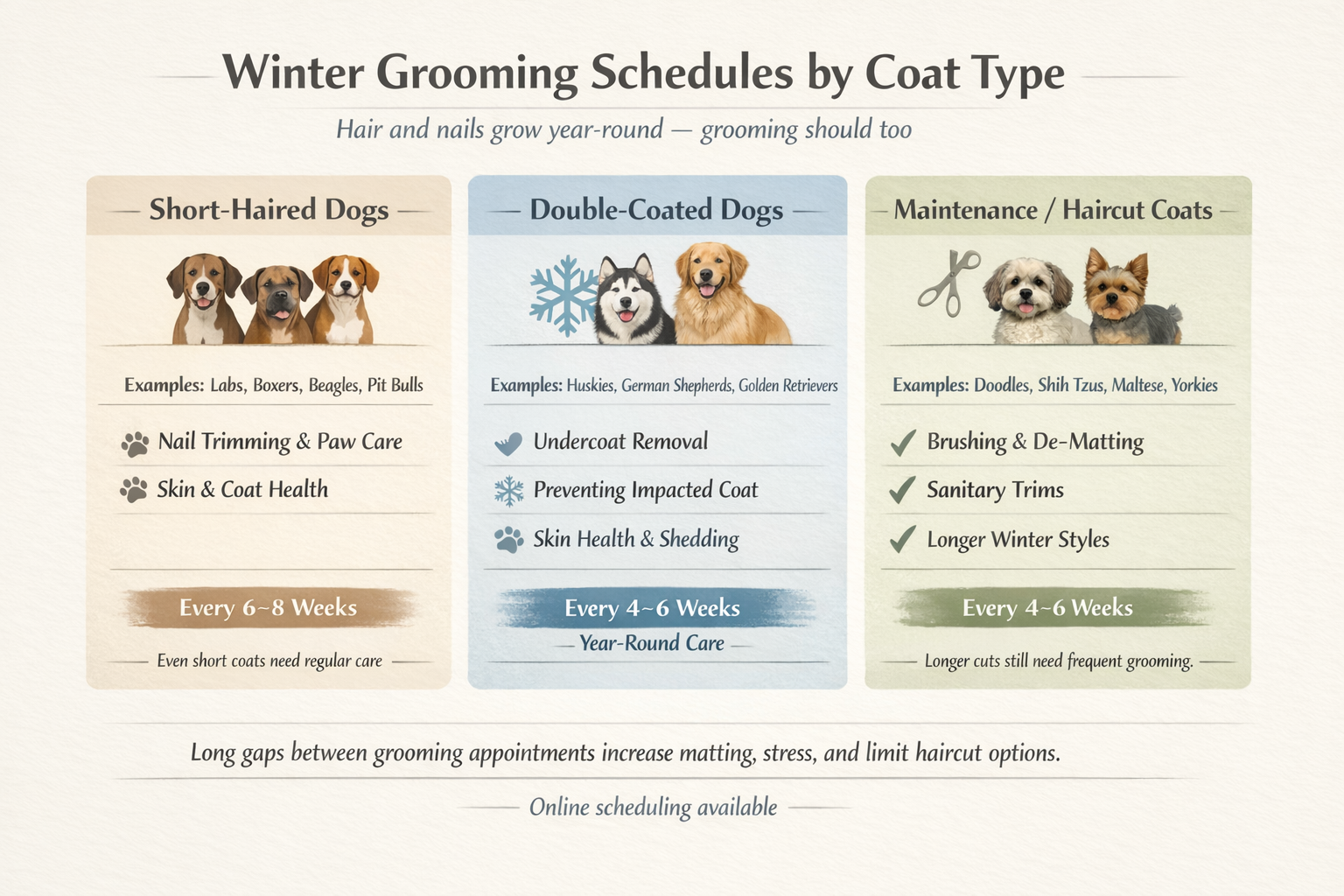
A thoughtful year-round grooming approach often includes:
Shorter grooming intervals during heavy shedding seasons
Continued maintenance through cooler months
Seasonal haircut adjustments rather than long gaps
This supports coat health, joint health, and a smoother transition into warmer weather.
Interested in Winter Grooming Support?
If you are located in Tomball or the surrounding areas and would like professional grooming support this winter, you can schedule directly through our online booking platform using the link below.